Friday, September 28, 2012

For one euro to Laos

Two hours in a very authentic local bus brought me to Chiang Khong this morning. Not much to do there: one street, no traffic lights, two monasteries. Small wooden longboats ferry passengers across the Mekong river to Houay Xay in Laos, for one euro, where it takes a few minutes to "check in" to Laos. Houay Xay is a small village as well, but more scenic with a small hill with - what else - a monastery on top. It feels poorer but friendlier than the Thai side. First I had a light lunch, paying fifty thousand kip. One of those currencies with way too many zeroes.

There's a local volunteer aid program for local villages in Houay Xay, called Project Kajsiab Laos. (See Facebook.) They operate a guesthouse and restaurant, and I went to their communal dinner and chatted with the volunteers until late.


Wednesday, September 26, 2012

The Golden Triangle

Last stop in Thailand: Chiang Rai is a smaller version of Chiang Mai without the traffic. It's at the south end of the Golden Triangle in the border area between Thailand (check), Myanmar (check), and Laos, where I'll be tomorrow. The attraction here is nature, with waterfalls, forests, mountains, and rivers, but this time it's just a convenient stop on the way to Chiang Khong at the border.


Tuesday, September 25, 2012

Chiang Mai

It's a long train ride from Bangkok to Chiang Mai in the north of Thailand, over 14 hours - in part because the tracks were damaged during the monsoon season this year. The first-class sleeper ticket was a good investment. Chiang Mai is Thailand's second-largest city, after Bangkok, which is fifty times larger by population. The center is a square of nearly 4 km^2, enclosed by a moat and some remains of the old city wall. Main streets are busy and unattractive, but the numerous curving side streets instantly teleport the visitor to tranquil and green village life. Of course, buddhist temples with their golden shrines abound, including the enormous ruined stupa in the photo. A picture of the revered King of Thailand is always near. People are much more open and friendly than in busy Bangkok. The big thing here is trekking to hill tribe villages, river rafting, elephant riding, paragliding, and other adventure sports, but I had done much of that during two previous visits so I took it easy this time.


Sunday, September 23, 2012

Pattaya

<p dir=ltr>Back in Thailand. After a brief visit to Bangkok I went on down the coast to Pattaya. This town has a reputation for tourism gone wild, like Palma de Mallorca, Cancun, Vang Vieng, or Las Vegas, so I have always avoided it in the past. Time to change that. It's true, the town has an unusual density of hotels, restaurants, bars, and massage parlors (follow the cries of "massaaaaage sir"), and it does have a few tourist zoos like the eponymously named Walking Street with its garish flickering billboards and gogo bars. A gogo bar is basically a brothel masquerading as a bar. But apart from those it's a large, busy, and unusually unattractive town with too much traffic and out-of-control highrise development projects.</p>
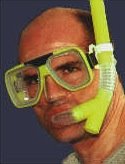
<p dir=ltr>I went there not to gawk at pole dancers, but to go scuba diving. Not bad, they have some nice corals and wrecks around beautiful islands in the Gulf of Thailand, but it can't touch Indonesia. The corals aren't as colorful, there are fewer fish, and recent rain has reduced visibility in the water to less than ten meters. In a few places it felt like swimming in pea soup, making it hard to stay oriented. But diving is always fun even if there's no mantas gliding by.</p>


Friday, September 21, 2012

Yangon and Dala

Yangon is a large busy city at the Yangon River. Big rusty ferries full of shouting street vendors selling everything from jackfruit to toothpaste cross the river. The other side is called Dala, and it's a different world. It feels like a river delta village, with small bamboo and wood houses spaced widely, with forests, fields, and little lakes and channels. All that within view of a city of six million. People here are friendly and seem to have plenty of time; some guys were calling out to me and we ended up chatting for two hours. They didn't speak English, or just enough to point at each other and say "crazy". So they taught me words in their language, and had me repeat them until I got it right, sort of. Unfortunately they couldn't tell me what they mean so there was a sense of futility about it, but we had a lot of fun.


Wednesday, September 19, 2012

Buddha spotting

The country is full of Buddha statues, many golden, or covered in plaster, or plain brick. But on closer inspection, many of those are monks, not Buddha. Buddha is actually the title of someone who has achieved enlightenment, not a specific person. But with a capital B it usually refers to the first buddha, the Indian prince Siddhartha, and most statues depict him. The iconic fat Chinese buddha mostly found in Western Chinese restaurants is a buddha, but not the Buddha.

Buddha statues appear mostly in the full lotus position with the teaching or meditation mudra (hand position); more rare is reclining or standing up. The earlobes of Buddha statues are elongated and touch the shoulders, he has short curly hair, the top of the eyes have a little depression, he has a jewel between the eyebrows, fingers and toes have almost equal length, and the soles of his feet are covered in symbols. Any statue that fails the earlobe test is just some monk.


Tuesday, September 18, 2012

Inle Lake

Inle lake is up in the eastern mountains, so it's pleasant and cool after the humid heat of Mandalay. The lake is very shallow and is now, at the end of the rainy season, at its largest. There are many villages in the lake, where all houses are built on stilts and are reachable only by those long narrow wooden boats. Everything is manual labor. They have an unusual method to row their boats with their right leg, hooking the paddle with their feet and making an odd twisting motion. Looks quite precarious but I am sure nobody ever gets wet. Our boat had a motor.

This being Myanmar there are of course numerous pagodas and monasteries all over the shore, in one case with a field where some 900 stupas are packed so tightly together that one couldn't squeeze through the gaps. I also saw a huge cave some distance away with over 8000 golden buddhas and little stupas inside, like a warehouse. My hotel is a huge fancy resort with huts built out on the water, but getting there is a long, slow, bumpy ride over narrow roads. The little airport at nearby Heho looks like a bus station, and works like one; every once in a while a little turboprop lands and some people get off while others get on. Except for the resorts, tourism hasn't really arrived here.


Friday, September 14, 2012

Mandalay

Mandalay is not a beautiful town. The city center is loud, busy, and ugly. The enormous palace ground has an authentic moat and wall, but the interior is mostly an army camp now plus a hastily built imitation of a few of the old buildings. The city doesn't really have much in the way of tourist infrastructure - along the moat you'd expect souvenir shops and cafés but you are more likely to find tourist essentials such as shops selling air conditioners, buckets of paint, steel rebar, mattresses, and bathtubs. There are green and shady neighborhoods that look deserted and undeveloped, and others that are rather poor. I have walked all day and found a few gems, like the Ein Daw Yar pagoda area that looks more like a pleasant green village attached to an enormous market, where I sat and talked to locals for hours. English is surprisingly well spoken, and usually people didn't learn it in school, but by reading books and talking to tourists, memorizing a few new words every day. I hear German and French as well.

Of course I also did the temple tour. The Mahamuni temple with its gilded interior contains a three-meter Buddha to which pilgrims have attached so much gold leaf over the centuries that it's now 20cm thick. Mingun across the Ayeyarwady river has a 150m unfinished stupa, built from solid brick to support a height that was never reached; it has enormous cracks from an 1838 earthquake. Kuthodaw pagoda has 729 chedis, each housing a tablet of Buddha's writings. On top of a hill is a mirror-tiled pagoda with great views. And around the pagodas hawkers sell bottles of "cocacolawaterverycold", so I am afraid Myanmar isn't immune to Western brands after all...


Wednesday, September 12, 2012

Google fail

Google's shoddy Blogger app finally posted the previous article on the 15th attempt, but not without losing the photos. Here they are. Do they test this stuff at all? Or only on the company network?


The road to Mandalay

Rudyard Kipling never was in Mandalay, but I am. It's a long drive from Bagan. I saw more pagodas (of course) and a number of villages. Only old people and children were there, everyone else was out working in the fields. The villages are built from bamboo and wood, there are animal pens, and large tarps on the ground where beans dry in the sun while men churn them with their feet. Young men climb palm trees to get their sap, which is used to make flavored sugar and to run a distillery. Buffalo pull grindstones around and around. All extremely rural.

Also climbed some 800 steps to a mountaintop monastery. It will make a brilliant lair if I ever accept the job as evil  overlord. I haven't seen much of Mandalay; I was walking the shore of the Ayeyarwady river that runs the length of Myanmar (the British call it Irrawaddy) and saw primitive bamboo huts lining the muddy beach and lots of boats and rafts unloading wood. A very primitive life. Across the street, my hotel room is so big that I can use a telephoto lens to take a picture of it.

Tuesday, September 11, 2012

Two thousand pagodas

Yangon has the largest and the most golden pagoda, but Bagan makes up for that with numbers. They grow them like mushrooms. On forty square kilometers there are 2000 of them, mostly made of brick but there is some marble and gold as well. For rich people it's chic to rebuild pagodas, so many of them are rebuilt with little regard for authenticity. The guide book quips, the dodgy contractors that today "restore" piles of rubble are the descendants of the dodgy contractors who threw up the originals from the 11th to 13th centuries, at a furious clip of one every two weeks.

Anyway, the result is stunning. No matter where you turn, there's a pagoda rising over the trees. Many are quite large and most contain a Buddha statue, or one for each direction of the compass. Plaster has mostly fallen off but some intricate frescoes remain. The highlight was a pagoda that could be climbed, for a fantastic view of the plain.


Golden pagodas

There are many pagodas around Yangon, more than one would think people would need, and I have seen a number of them today including one on an island in a lake, where no shoe may be brought to the island. But the largest and most famous one is Shwedagon. It's almost a hundred meters tall and surrounded by hundreds of smaller chedis, all covered in gold. The effect is absolutely stunning; this must be one of the world's most beautiful sights along with places like the Taj Mahal or Angkor.

Normally visiting a pagoda takes maybe half an hour. At this one I spent four hours just looking at it, and talking to a monk for several hours who came here from his monastery in the delta to see the place. Talking to him confirms my impression of Myanmar so far: a people that have been in chains for decades and now see their country grow at an incredible speed. Three years ago a cell phone cost US$ 4000, now 100 and dropping. Three years ago the government was raiding monasteries, and now this monk has Gmail account. Stop reading travel books on Myanmar, they are hopelessly outdated by the time they appear on the shelves. Not all is well in Myanmar but everyone has a gleam in their eyes and has high hopes for the future.


Monday, September 10, 2012

Myanmar

Myanmar, also called Burma, was until recently a highly locked-up military dictatorship. Hard to get in, hard to get out. It's now changing rapidly. Yangon, the largest city, is changing at a breackneck pace. Just now emerging from its time capsule, it's full of beautiful but very dilapidated colonial architecture. Life happens on the street, there are few traditional shops, and the usual brands like Coca Cola, Wall's ice cream, and McDonalds are completely absent, one of the very few places in the world where this is the case. On the other hand, streets are packed with cars; there are no motorcycles and almost no bicycles, and no modern public transportation system. The place is headed for a traffic collapse.

People are friendly and curious, always ready to smile and chat, even in this big city of about six million  (nobody knows exactly). People do speak a few words of English and that's enough. Even children, one boy was trying to pimp! A society in upheaval... Normally I like street food but I have avoided it here because the stalls set up on the broken sidewalks seem unusually dirty. Everywhere in southeast Asia people prefer to fix broken things for decades, instead of throwing them away at the first sign of wear like we do, but here it seems they have to make do with equipment dating back to Napoleon. But in general, Yangon is a lot more developed, and modernizing much more rapidly, than I expected.

Saturday, September 8, 2012

Getting ready for Myanmar

Hello, I am back! Greetings from Bangkok. Tomorrow morning I'll fly to Yangon in Myanmar, a country that was until recently an impregnable military dictatorship. Tourism is still highly regulated but possible. Trouble is, bringing a cell phone into Myanmar is illegal, and the Internet is somewhere between highly instable and nonexistent. So, this blog might be right back at being dormant until the 20th, unless I find a network somewhere...

But I am looking forward to visiting a country that has been in a time capsule and isn't spoiled by tourism and uncontrolled development like so many other places in southeast Asia. See you soon! I am sure I'll have stories to tell.